
How Trump's 2025 Tariffs Are Impacting the Architectural Metal & Glass Industry
The 2025 tariffs on imported steel, aluminum, and related products are creating significant challenges for the architectural metal and glass industry. While the tariffs were intended to strengthen domestic manufacturing and reduce reliance on foreign suppliers, they have also introduced higher material costs, supply chain disruptions, and increased uncertainty for architects, contractors, developers, and building owners.
Architectural metal and glass systems depend heavily on steel and aluminum, making the industry particularly vulnerable to tariff-related cost increases. Products such as curtain walls, storefront systems, aluminum windows and doors, glazing systems, metal panels, railings, and building envelope assemblies all rely on these materials. As a result, even modest increases in steel and aluminum pricing can have a substantial impact on project budgets.
Increased Budget, Supply Chain Disruptions and Contract Risk
One of the most immediate consequences of the tariffs has been raising material costs. Architectural glazing contractors and façade specialists rely on aluminum extrusions, steel anchors, framing systems, fabricated components, and specialized hardware to complete projects. As import costs increase, those expenses are passed through the supply chain, resulting in more expensive curtain wall and storefront systems, higher pricing for windows and doors, increased costs for glazing assemblies, and higher bid prices for commercial construction projects. Companies operating under fixed-price contracts are also seeing profit margins shrink, as material costs continue to climb.
The impact extends beyond metal components alone. Although glass itself is not always directly affected by tariffs, many glazing systems incorporate aluminum framing, steel anchors, metal hardware, fabricated assemblies, and structural support components. As the costs of these materials rise, the total installed cost of glass and glazing systems increases, creating additional budget pressures for owners, developers, and contractors.
Supply chain disruption has emerged as another major challenge. Many companies that once relied on overseas suppliers are reevaluating their sourcing strategies, with some shifting to domestic manufacturers and others exploring suppliers in countries less affected by tariffs. This transition can result in longer lead times, supplier changes, product substitutions, inventory shortages, and project delays. For projects operating under strict schedules, these disruptions can create significant risks and scheduling challenges.
The broader construction industry is also feeling the effects. Higher steel and aluminum costs are contributing to increased overall construction expenses, making it more difficult for developers to maintain project budgets. Rising material prices may lead to delayed project starts, budget overruns, reduced project scope, financing concerns, and more cautious development planning. As owners seek greater cost certainty, contractors face growing challenges in accurately forecasting future material costs.
Tariff-related uncertainty has also increased contract risk. Projects bid before tariff increases may experience unexpected cost escalations months later, putting pressure on contractors and subcontractors working under fixed-price agreements. To protect themselves, many companies are incorporating escalation clauses into contracts, negotiating material allowances, securing materials earlier in the project lifecycle, and maintaining closer communication with suppliers to monitor evolving pricing trends.
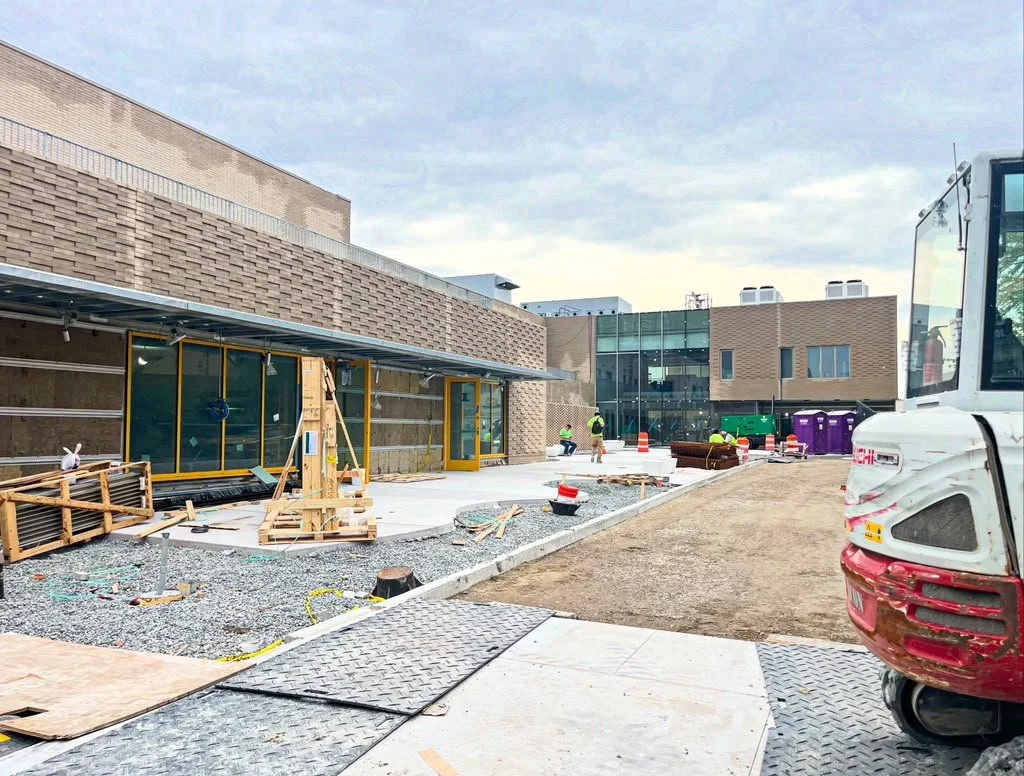
Commercial construction project featuring architectural glass storefronts, aluminum framing, curtain wall systems, and modern building envelope design.
Potential Benefits for Domestic Manufacturers
While tariffs present challenges for much of the construction industry, domestic steel and aluminum manufacturers may benefit from reduced foreign competition. Increased demand for U.S.-made materials could strengthen domestic manufacturing capacity, improve pricing power for American producers, and encourage investment in local production. Architectural metal fabricators with strong domestic supply chains may be better positioned to navigate market volatility and capitalize on these opportunities.
How the Industry Is Adapting
In response to the changing market, architects, builders, and manufacturers are adapting their strategies. Many are procuring materials earlier to lock in pricing and availability, evaluating alternative products that may be less affected by tariffs, increasing their use of domestically sourced materials, and leveraging modular or prefabricated systems to improve efficiency. Strong supplier relationships have become increasingly important as companies work together to anticipate lead-time challenges and pricing fluctuations.
For developers, contractors, and building owners, proactive planning is essential. Verifying current tariff rates, evaluating domestic sourcing options, budgeting for potential cost increases, maintaining contingency allowances, monitoring policy changes, and engaging suppliers early in the design and procurement process can help minimize risk and improve project outcomes.
Overview
Trump's 2025 tariffs have significantly altered the economics of architectural windows, doors, curtain walls, storefronts, and glazing systems. Rising steel and aluminum costs, supply chain challenges, and pricing uncertainty are placing added pressure on projects throughout the construction sector. While domestic manufacturers may benefit from increased protection, architectural metal and glass contractors must focus on strategic sourcing, careful budgeting, and proactive risk management to remain competitive in an increasingly complex marketplace.
SOURCES
"Section 232 Tariffs on Steel and Aluminum." Congressional Research Service, 7 July 2026, https://www.congress.gov/crs_external_products/IN/PDF/IN12519/IN12519.14.pdf.
"Section 232 Tariffs on Steel and Aluminum." Congressional Research Service, 18 May 2026, https://www.congress.gov/crs_external_products/IN/PDF/IN12519/IN12519.8.pdf.
Oliveri, Carl. "The Impact of Trump's Steel and Aluminum Tariffs on the Construction Industry." NASBP Pipeline Newsletter, National Association of Surety Bond Producers, 2025, https://www.nasbp.org/pipeline-newsletter/the-impact-of-trumps-steel-and-aluminum-tariffs-on-the-construction-industry/.
Malone, Kelly Martin, John T. Hugo, and Bridget Araldi. "Tariffs and the Construction Industry." MG+M The Law Firm, 21 Feb. 2025, https://www.mgmlaw.com/news-insights/tariffs-and-the-construction-industry.
"Tariffs and the Construction Industry." JD Supra, 21 Feb. 2025, https://www.jdsupra.com/legalnews/tariffs-and-the-construction-industry-5100984/.
"Tariff Impacts on the Construction Industry." Wood Smith Henning & Berman LLP (WSHB), 2025, https://www.wshblaw.com/experience-tariff-impacts-on-the-construction-industry.
"US Tariffs on Steel and Aluminum: Analyzing the Impacts." Boston Consulting Group (BCG), 21 Feb. 2025, https://www.bcg.com/publications/2025/us-tariffs-steel-aluminum-analyzing-impacts.
"Impact of Trump's Tariffs on the Steel and Aluminum Industry." Aranca, 15 May 2025, https://www.aranca.com/knowledge-library/articles/investment-research/trumps-tariffs-impact-steel-aluminum-industry.